
What is the difference between off-grid inverters, grid-tied inverters, and hybrid inverters?
What is the difference between off-grid inverters, grid-tied inverters, and hybrid inverters?
The main differences between off-grid inverters, grid-connected inverters, and hybrid inverters are their functions, application scenarios, and how the power flows.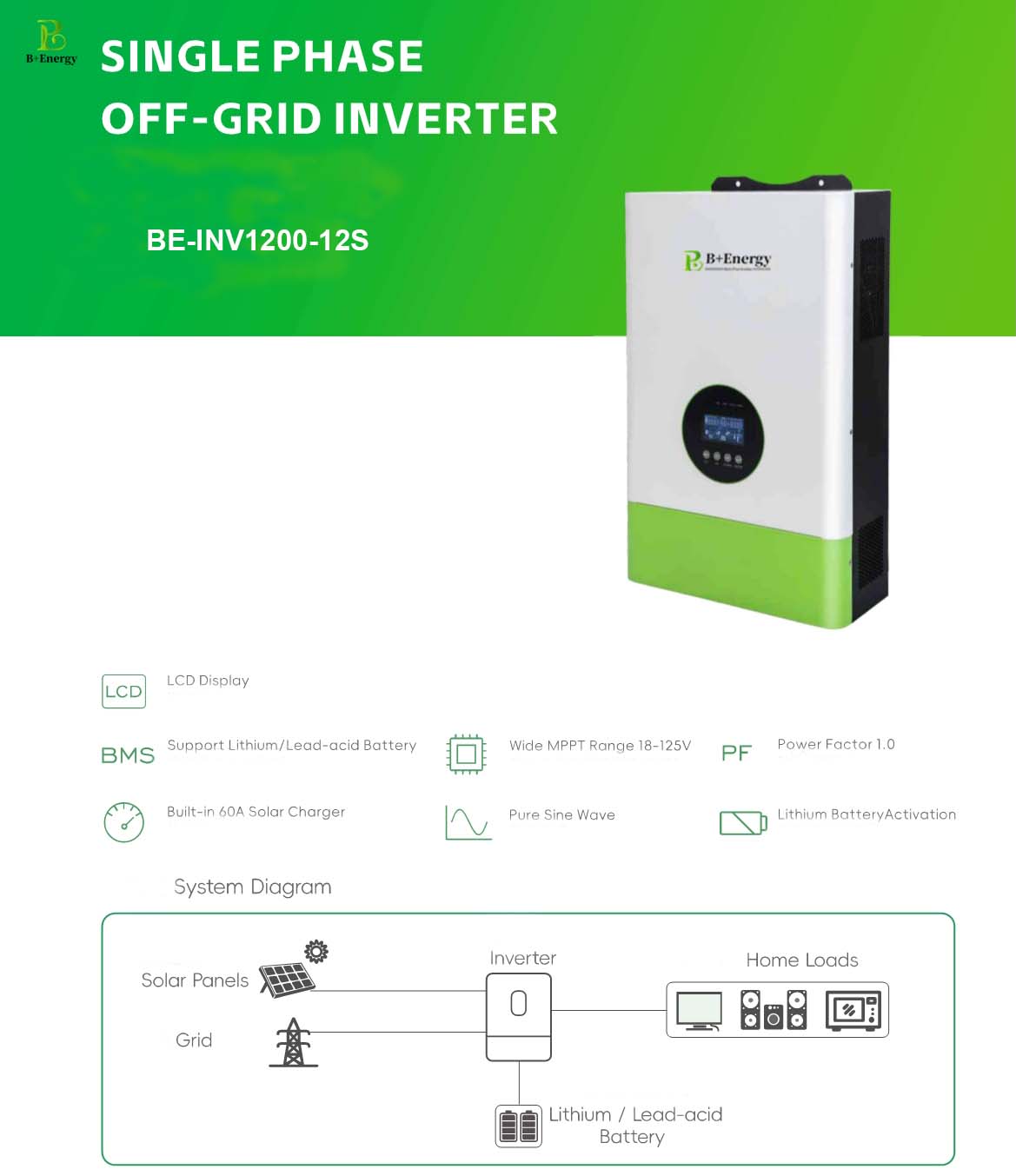
Functional Differences
Off-grid Inverter: Main function: Converts DC power to AC power for power supply loads. It can output stable AC power and store excess energy.
Grid-connected Inverter: Converts DC power generated by solar panels to AC power and connects it to the grid. It has grid detection and protection functions to ensure safe and reliable grid-connected power generation. It can achieve bidirectional power flow, selling excess power to the grid or supplementing shortfalls with power from the grid.
Hybrid Inverter: It has the functions of both an off-grid inverter and a grid-connected inverter. It can switch between off-grid and grid-connected operation modes for solar power generation systems. It has bidirectional current flow, allowing for mutual supplementation and switching between solar power and the grid.
Application Scenarios
Off-grid Inverter: It is suitable for remote areas or locations without grid access. It can serve as a backup power source to cope with sudden power outages or disasters.
Grid-Tie Inverters: Suitable for use in areas with grid power, especially where excess power needs to be sold to the grid for profit. Suitable for both home and commercial use, they can achieve self-sufficiency, energy conservation, emission reduction, and economic benefits.
Hybrid Inverters: Suitable for areas with unstable power supply, they can provide a stable power supply through energy storage. Suitable for rural households or businesses, they can not only meet their own needs but also sell excess stored power to the grid, ensuring their own power supply and generating revenue.
Power Flow Methods
Off-Grid Inverters: Power flows unidirectionally, from solar panels to energy storage devices and then to the load.
Grid-Tie Inverters: Power flows bidirectionally, from solar panels to the grid and from the grid to the load.
Hybrid Inverters: Power flows bidirectionally, but with greater flexibility, allowing for complementary and switching between solar and grid power as needed.
In summary, off-grid, grid-connected, and hybrid inverters differ significantly in their functionality, applicable scenarios, and power flow methods. Choosing the right inverter type requires careful consideration of factors such as specific power needs, geographic location, and economic benefits.
Inquiry Email: info@bestplusenergy.com
 Previous Post
 Next Post